4 Results for "

Narcissus pseudonarcissus L.

" in MedChemExpress (MCE) Product Catalog:
Products (4)

4 Results for "Narcissus pseudonarcissus L." in MCE Product Catalog:

Cat. No.: HY-NP075
Synonyms: NPL
Narcissus Pseudonarcissus (Daffodil) Lectin (NPL) is a plant lectin that can be used as a probe to specifically bind biomolecules (such as polysaccharides, peptides, etc.).Narcissus Pseudonarcissus (Daffodil) Lectin (NPL) is a biological material or organic compound that can be used in life science research .
loading...
    loading...
Cat. No.: HY-NP154
Synonyms: NPL (Biotinylated)
Narcissus Pseudonarcissus (Daffodil) Lectin Biotinylated is a plant lectin that can be used as a probe to specifically bind biomolecules (such as polysaccharides, peptides, etc.). Narcissus Pseudonarcissus (Daffodil) Lectin Biotinylated is a biological material or organic compound that can be used in life science research .
loading...
    loading...
Cat. No.: HY-137305
CAS No.: 25650-83-3
Target:  

Others

연구분야:  

Others

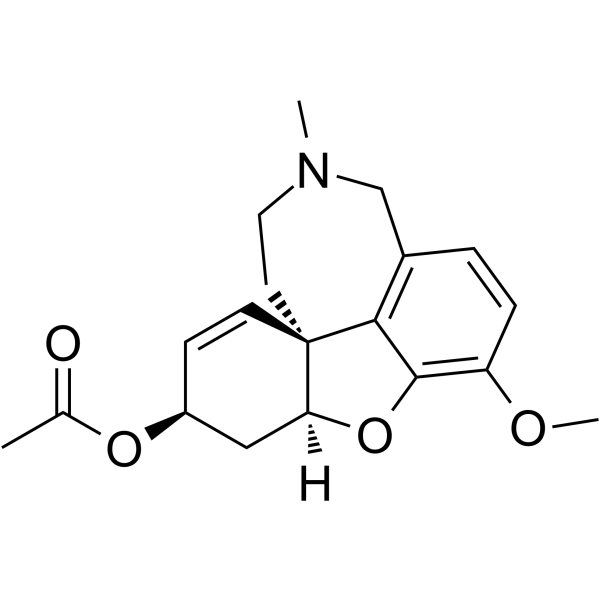
O-Acetylgalanthamine, a acetylated alkaloid, is a natural product that can be isolated from Narcissus pseudonarcissus .
loading...
    loading...
Cat. No.: HY-135752
CAS No.: 99827-19-7
Target:  

Bacterial

연구분야:  

Infection

Carbendazim mixture with flusilazole is a fungicide used to control sooty mold caused by Botrytis narcissicola. The disease is the most common foliar disease of daffodils (Narcissus cultivars) in the UK and causes significant losses in bulb and flower production. Carbendazim mixture with flusilazole was found to be effective in reducing lesion size and significantly reducing symptoms of secondary sooty mold after spraying when used in combination with several other fungicides. In field trials in Cambridgeshire and Lincolnshire, a spraying program using this fungicide mixture was effective in controlling sooty mold. In addition, alternating four to six sprays using two or three fungicides with different modes of action not only reduced disease damage but also increased bulb production. The study discusses the selection of appropriate fungicides and control methods that may reduce the number of spraying applications.
loading...
    loading...

